
What on Earth have we done?

There has been scientific consensus for over 40 years
The first World Climate Conference was in 1979 in Geneva. Scientists agreed that carbon dioxide emissions were having a negative impact on the planet and that we should reduce them. The meeting led to the formation of the International Panel on Climate Change (IPCC).
Rather than following this advice, governments have allowed global carbon dioxide emissions to balloon in the last forty years. The IPCC now says we need “rapid, far-reaching and unprecedented changes in all aspects of society” to avoid catastrophic climate change.
What does climate change mean for us?
For the planet
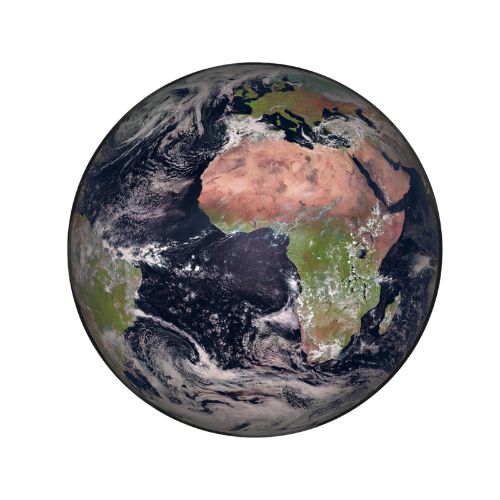
- Mass extinctions of animals and plants
- More frequent and severe natural disasters
- Rising sea levels as ice sheets melt
- Mass migration
For the UK

- Loss of species like bees and cod
- More heatwaves and severe weather
- Food insecurity
- Frequent flooding along eastern coasts
If we go too far, we can’t stop it and climate change spirals out of control
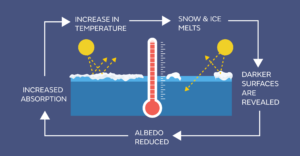 The Albedo Effect and Wildfire risk are just two of a number of runaway feedback loops we could accidently create. We don’t know how close we are to reaching these tipping points. This is why it is crucial that we stop contributing to climate change as rapidly as possible.
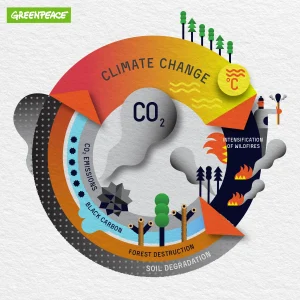 Climate science is very complex, as there are so many parameters to take into account in these feedback loops. But what we know for sure is that the longer we wait to take global action, the closer we get to the “tipping point”, the point at which it is too late and the feedback loops get out of control.